25 Kg (Min. Order)
₹250.00



 0
0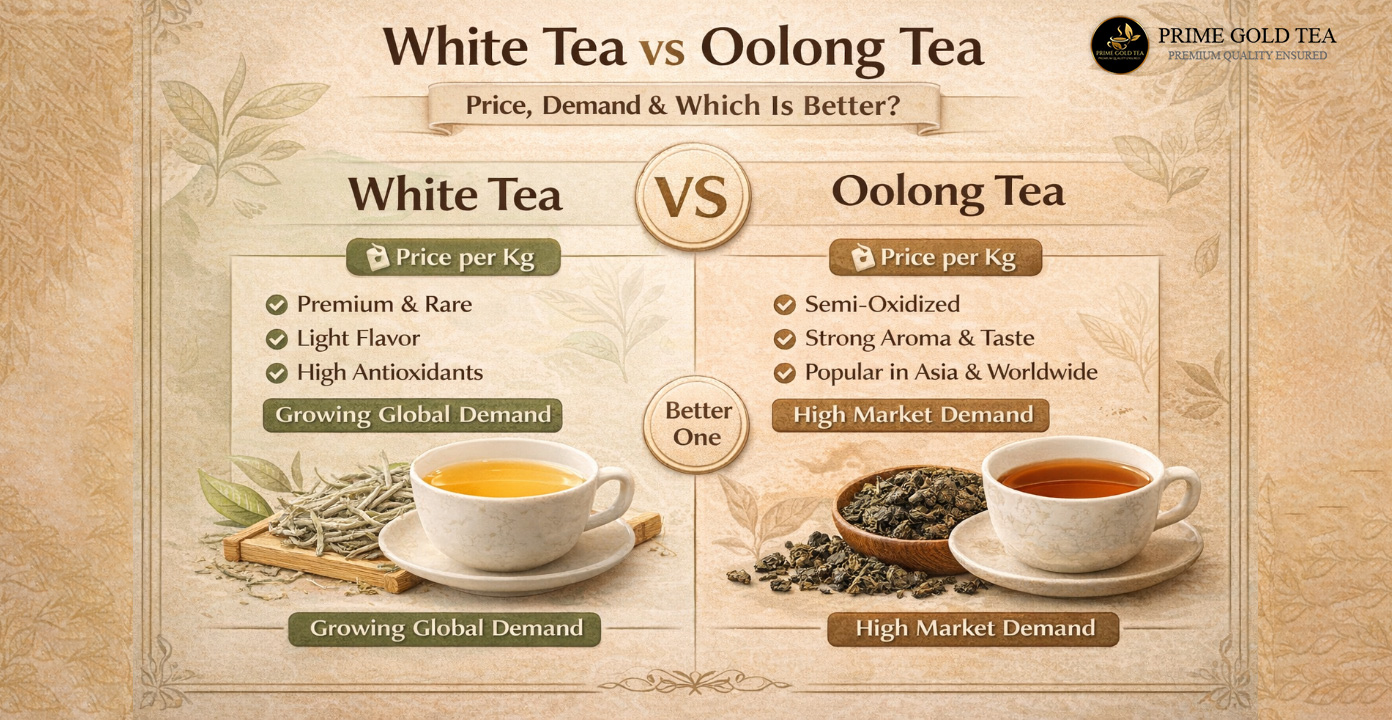
Tea has been an integral part of human culture for centuries, and among the many varieties available today, White Tea and Oolong Tea stand out for their premium quality, unique processing methods, and growing global demand. The debate of White Tea Vs Oolong Tea often revolves around price per kg, health benefits, taste, caffeine content, and market demand.
This detailed guide explores everything you need to know about white tea and oolong tea, helping you decide which tea suits your lifestyle, budget, and taste preferences.

 Add to Cart
  Add to Cart
  Add to Cart
  Add to Cart
 White tea is one of the least processed types of tea, made from young tea buds and tender leaves of the Camellia sinensis plant. The leaves are gently withered and dried, with no rolling or heavy oxidation. This minimal processing helps preserve the tea’s natural antioxidants and delicate flavor.
The name “white tea” comes from the fine silvery-white hairs found on the unopened buds. Because it uses young leaves and requires careful hand-plucking, white tea is often considered a luxury tea category.
Oolong tea is a partially oxidized tea that falls between green tea and black tea. Its oxidation level can range from 10% to 70%, resulting in a wide variety of flavors and aromas. The leaves are withered, gently bruised, oxidized, and then fired to stop oxidation.
Oolong tea is especially popular among tea enthusiasts because of its complexity and ability to produce multiple flavorful infusions from the same leaves.
White tea undergoes the simplest processing method among all teas. After harvesting, the leaves are left to wither naturally and then dried. This process maintains the leaf’s original structure and nutritional value.
Oolong tea processing is more complex. After withering, the leaves are shaken or rolled to bruise the edges, encouraging controlled oxidation. Once the desired oxidation level is reached, the leaves are heated to stop the process.
White tea offers a light, smooth, and refreshing taste with subtle notes of floral, honey, or melon. It has a gentle sweetness and very little bitterness, making it ideal for those who prefer mild teas.
Oolong tea has a much broader flavor spectrum. Light oolong teas can be floral and creamy, while darker oolongs may deliver roasted, nutty, or caramel-like flavors. This variety makes oolong tea appealing to experienced tea drinkers.
White tea is rich in polyphenols and antioxidants due to minimal processing. Regular consumption may help support immune health, skin wellness, heart health, and overall cellular protection.
Because of its low caffeine content, white tea is suitable for people sensitive to caffeine and can be consumed later in the day.
Oolong tea is known for supporting metabolism and digestion. Its moderate caffeine level provides gentle energy, while L-theanine promotes mental clarity and calmness. Oolong tea is often associated with weight management and improved focus.
When comparing White Tea Vs Oolong Tea for caffeine levels:
Actual caffeine levels depend on leaf quality, brewing temperature, and steeping time.
White tea typically commands higher prices due to limited production, careful harvesting, and premium positioning. In wholesale and bulk markets, white tea price per kg can range from:
Oolong tea prices vary widely depending on oxidation level and origin. Typical oolong tea price per kg ranges from:
Overall, white tea tends to be more expensive on average, while oolong tea offers more price flexibility.
Global demand for white tea is growing steadily, driven by increasing health awareness and interest in premium wellness beverages. White tea is especially popular in high-end retail and export markets.
Oolong tea enjoys strong demand in traditional tea-drinking regions and among specialty tea consumers. Its versatility and complex flavor profile continue to attract enthusiasts worldwide.
The choice between White Tea Vs Oolong Tea depends on personal preference.
Both white tea and oolong tea are exceptional in their own ways. White tea offers elegance, subtlety, and antioxidant richness, while oolong tea delivers complexity, balance, and versatility.
When comparing White Tea Vs Oolong Tea in terms of price per kg, benefits, and demand, neither is universally better. The best choice depends on your taste, budget, and lifestyle preferences.