


-
 0
0
0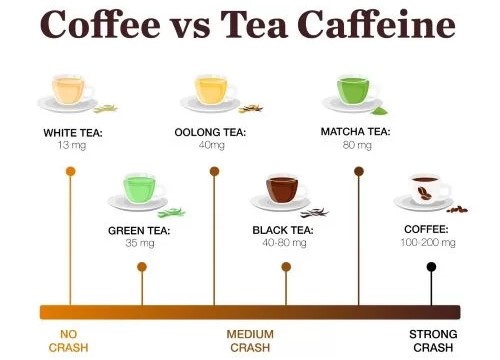
Tea and coffee are the world’s most consumed beverages after water, and both contain caffeine — a natural stimulant known for boosting alertness and energy. However, the amount of caffeine in each, and how it affects your health, can vary greatly. This raises an important question: Which is safer – tea or coffee? Let's explore the details.
Caffeine stimulates the brain and central nervous system, helping you stay alert and prevent tiredness. It works by blocking adenosine, a neurotransmitter that relaxes the brain and makes you feel sleepy. While moderate caffeine consumption is considered safe for most people, excessive intake can lead to side effects such as:
| Beverage | Caffeine Content (per 240 ml / 8 oz cup) |
|---|---|
| Brewed Coffee | 95–120 mg |
| Espresso (30 ml) | 63 mg |
| Black Tea (CTC) | 40–70 mg |
| Green Tea | 20–45 mg |
| White Tea | 15–30 mg |
| Decaf Coffee | 2–5 mg |
| Herbal Tea | 0 mg |
However, high caffeine in coffee can lead to:
Tea is generally considered safer due to its lower caffeine content, especially for those who are sensitive to stimulants or have underlying heart or sleep conditions. It offers a balanced blend of alertness and relaxation thanks to L-theanine, making it ideal for sustained focus without the crash.
Coffee, while beneficial in moderation, can be too stimulating for some, especially if consumed multiple times a day.
According to health experts:
Both tea and coffee offer unique benefits, but tea wins the safety battle for most people due to its moderate caffeine levels and calming effects. Choosing CTC tea, in particular, gives a perfect balance — strong flavor, enough stimulation, and multiple health benefits.