

-
 0
0
0
Buying tea in bulk is not simply about finding the lowest price per kilogram. For retailers, distributors, tea shops, cafés, hotels and other commercial buyers, the right procurement decision depends on tea quality, grade, origin, consistency, price, minimum order quantity, packaging, supply reliability and customer demand.
A proper tea procurement checklist helps businesses compare suppliers systematically and avoid problems such as inconsistent batches, unsuitable grades, excessive wastage, weak liquor, poor aroma or unreliable delivery.
For businesses purchasing CTC tea, Assam tea, Dooars tea, Darjeeling tea, black tea or customized tea blends, this guide explains what to check before placing a bulk order.
Before confirming a wholesale tea order, check:
| Procurement Factor | What to Check |
|---|---|
| Tea Type | CTC, Orthodox, Black Tea, Green Tea, blended tea, etc. |
| Grade | BOP, BOPSM, BP, Dust, P, FOP, OP, TGFOP and required grades |
| Origin | Assam, Dooars, Darjeeling or other specified origin |
| Taste | Strength, briskness, astringency and overall cup profile |
| Aroma | Freshness and characteristic aroma |
| Liquor | Colour, strength and clarity after brewing |
| Leaf/Granule | Uniformity and grade consistency |
| Sample | Always evaluate a sample before large procurement |
| Price | Compare price against grade and quality, not price alone |
| MOQ | Confirm minimum order quantity |
| Packaging | 25 kg, 50 kg, 100 kg or customized packaging |
| Supply | Production capacity and repeat-order availability |
| Delivery | Dispatch schedule and transportation |
| Customization | Blending, grading and private-label requirements |
| Documentation | Invoice and applicable product/supplier documentation |
| Storage | Packaging suitability and storage conditions |
| Payment | Advance, credit or agreed commercial terms |
The first step in tea procurement is to clearly define what tea your business actually needs.
A retailer selling packaged tea to households may need a different product from a tea shop serving hundreds of cups every day. Similarly, a distributor may require several grades for different customers.
Prepare the following information:
Required tea type
Preferred origin
Required grade
Monthly consumption
Initial order quantity
Target buying price
Preferred packaging
Required cup strength
Target customer segment
Delivery location
Private-label requirement, if applicable
For example, a tea shop may prioritize strong CTC tea with fast infusion and good liquor, while a premium retailer may require an aromatic orthodox tea.
Having these requirements ready allows a wholesale tea supplier to recommend a suitable grade or blend rather than simply quoting the cheapest available tea.
Tea procurement should start with the product category.
Commercial buyers commonly purchase:
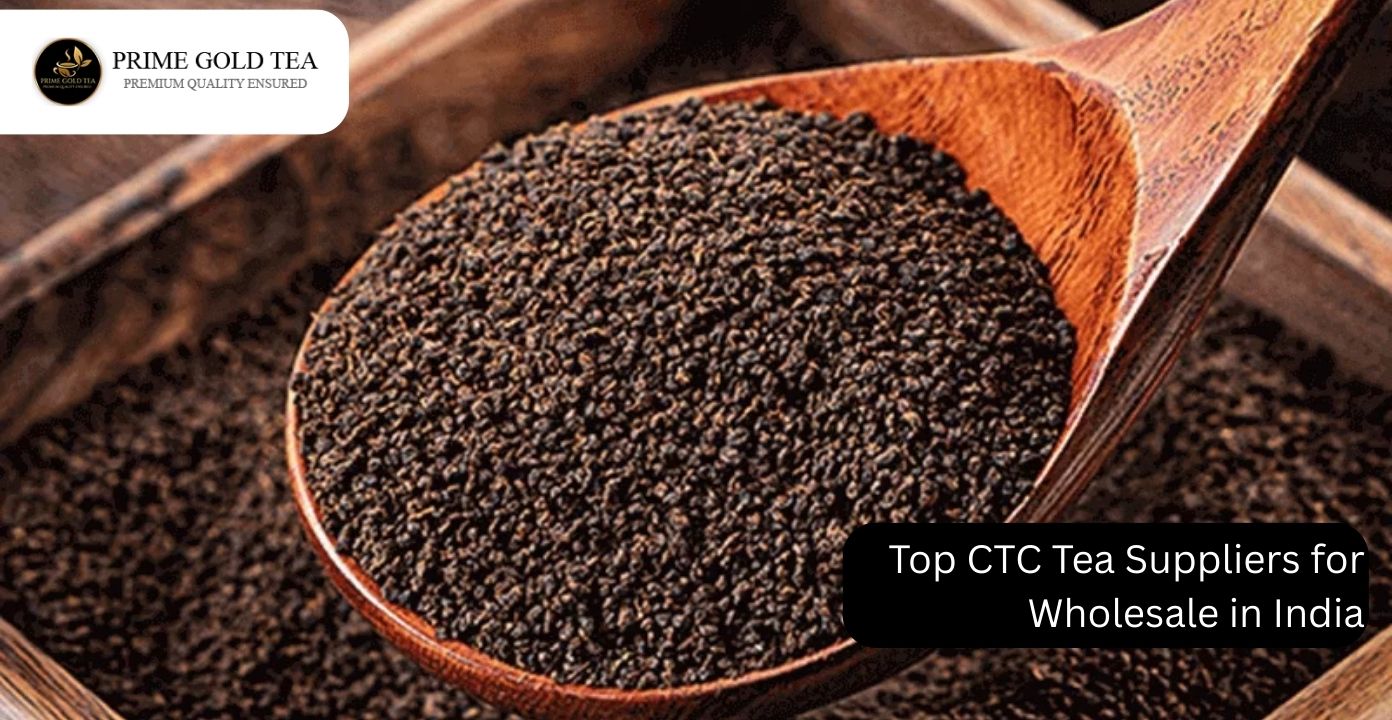
CTC stands for Crush, Tear, Curl. The processing method produces small tea granules designed for efficient infusion.
CTC tea is widely used for:
Milk tea
Chai shops
Hotels
Restaurants
Canteens
Tea stalls
Tea bags
Institutional consumption
Commercial tea blends
Its strong liquor and quick brewing characteristics make it an important category for high-volume buyers.
Assam tea is known for its strong and malty character and is widely used in commercial blends and milk tea applications.
It can be suitable for:
Tea shops
Retail packs
Hotels
Restaurants
Distributors
Tea blenders
Institutional buyers
Dooars tea can provide a different balance of strength, aroma and cup character and is commonly used in CTC tea procurement.
Darjeeling tea is associated with premium orthodox tea and distinctive aromatic characteristics. It is generally positioned differently from mass-market CTC tea.
Green tea serves a different consumer segment and should be evaluated according to the required leaf appearance, flavour, aroma and intended retail positioning.
Procurement rule: Do not compare different tea categories only on their per-kilogram price. Compare them according to their intended application and customer segment.
Tea grade is one of the most important factors in commercial tea procurement.
Depending on the product category, buyers may encounter grades such as:
BOP – Broken Orange Pekoe
BOPSM – Broken Orange Pekoe Small
BP – Broken Pekoe
PD – Pekoe Dust
Dust
P – Pekoe
OP – Orange Pekoe
FOP – Flowery Orange Pekoe
TGFOP – Tippy Golden Flowery Orange Pekoe
CTC grades
Customized or manufacturers' grades
Prime Gold Tea states that it offers a broad range of grades, including BOP, FOP, OP, BP, Dust, P, CTC, manufacturers' grades and TGFOP, along with customized grades.
Different grades can produce different:
Brewing speed
Liquor strength
Aroma
Mouthfeel
Appearance
Blending characteristics
Commercial applications
For example, finer tea particles can provide fast infusion, while other grades may be selected for particular strength or flavour characteristics.
Therefore, retailers and tea shops should avoid purchasing a grade simply because its price is lower.
Origin is another important part of the tea procurement checklist.
Ask the supplier:
Where was the tea produced?
Commercial buyers may specifically require:
Assam tea
Dooars tea
Darjeeling tea
West Bengal tea
Blended tea from multiple origins
The growing region can influence the tea's flavour, aroma, strength and market positioning.
Prime Gold Tea is based in Siliguri, Darjeeling and states that it supplies premium Dooars and Assam teas sourced from tea estates in India.
For distributors, origin information can also help create different product lines for different customer segments.
One of the most important rules for bulk tea buying is:
Do not evaluate a commercial tea supplier only from a price quotation. Request and test a sample.
A sample allows the buyer to assess the actual product before committing to a larger quantity.
Check the sample for:
Look at:
Colour
Granule or leaf uniformity
Cleanliness
Grade consistency
Aroma
Presence of excessive powder or foreign material
Evaluate:
Liquor colour
Strength
Aroma
Taste
Astringency
Mouthfeel
Brewing time
Performance with milk and sugar, where applicable
For tea shops, it is particularly important to test the tea using the same preparation method used in the shop.
A tea that tastes good when brewed in a laboratory-style preparation may perform differently in a commercial chai-making process.
For buyers looking for wholesale CTC tea, the procurement checklist should give particular attention to brewing performance.
Check:
Does the brewed tea produce the expected liquor colour?
Does it provide the required cup strength without requiring excessive tea quantity?
How quickly does the tea release its colour and flavour?
If the tea is intended for Indian milk chai, test the product with the actual milk-to-water ratio used by your business.
Does the tea perform similarly across repeated preparations?
Prime Gold Tea describes its CTC offerings as suitable for applications requiring strong flavour, colour and quick brewing, with grades available for different commercial requirements.
Price is important, but the cheapest tea is not automatically the most economical tea.
For commercial procurement, calculate the effective cost per usable cup or saleable kilogram.
For example:
Tea Cost per kg = ₹200
If one cup requires 2.5 grams of tea:
Approximate cups per kg = 1,000 ÷ 2.5 = 400 cups
Therefore:
Tea cost per cup = ₹200 ÷ 400 = ₹0.50
If another tea costs ₹220/kg but requires only 2 grams per cup:
Approximate cups per kg = 500
Tea cost per cup = ₹220 ÷ 500 = ₹0.44
The second tea has a higher purchase price but may have a lower tea cost per cup.
This is why tea shops should evaluate brewing efficiency, not only the quoted kilogram price.
MOQ can significantly affect procurement decisions.
Ask the supplier:
What is the minimum order quantity?
Is MOQ different for different grades?
Is MOQ applicable per product or total order?
Can multiple grades be combined in one shipment?
Is there a lower MOQ for samples or trial orders?
Does customized blending require a higher quantity?
Prime Gold Tea's website currently lists products with different minimum order quantities, including 25 kg and 100 kg options depending on the product.
Always confirm the current MOQ before placing an order, because product-specific commercial terms can change.
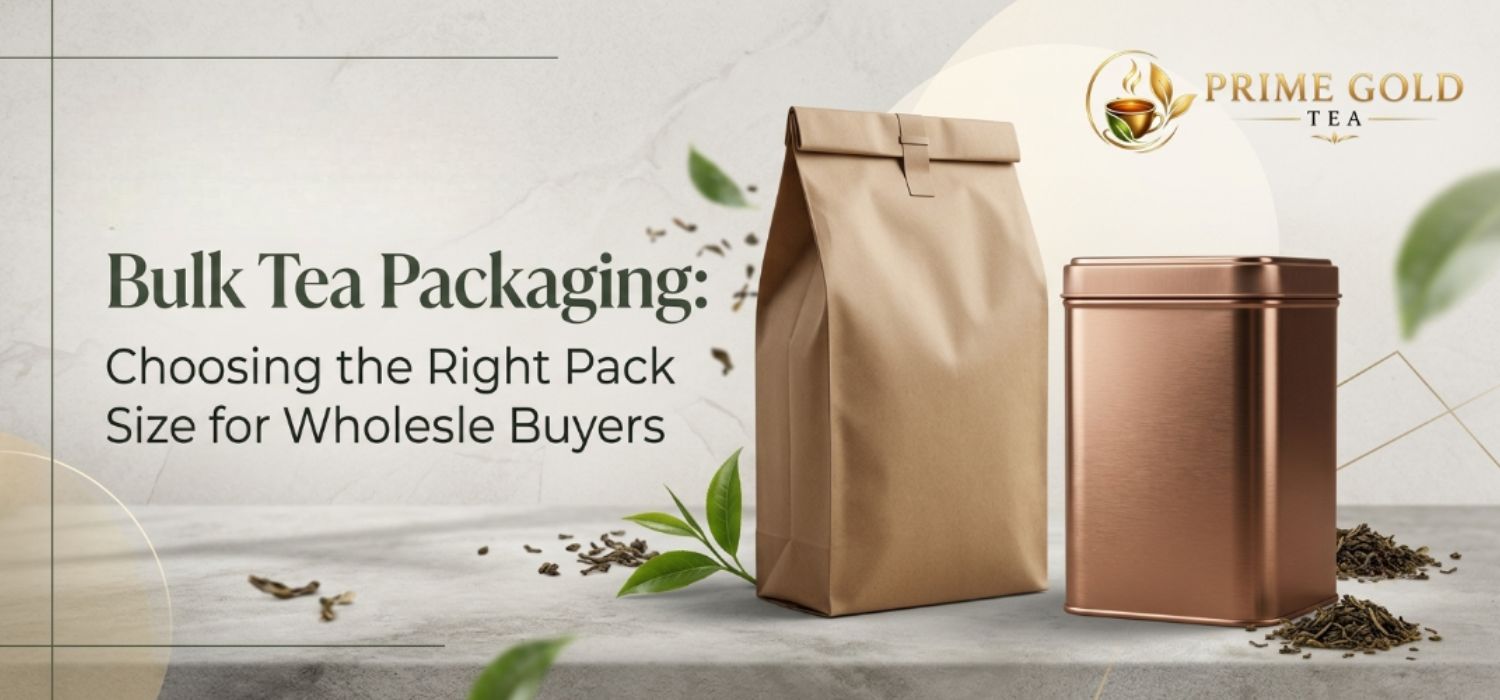
Packaging matters because tea can lose quality if exposed to unsuitable storage conditions.
Commercial buyers should ask about:
Packaging material
Pack size
Inner packaging
Outer packaging
Moisture protection
Storage suitability
Labelling
Batch identification
Bulk buyers may require packaging such as:
25 kg
50 kg
100 kg
Customized commercial packaging
Prime Gold Tea has previously listed bulk packaging options including 25 kg, 50 kg and 100 kg, along with customized packaging requirements.
For retailers who intend to repack tea, confirm whether the supplier can provide suitable bulk packaging and consistent product batches.
A reliable bulk tea supplier should be able to explain how tea quality is checked before dispatch.
Ask:
Is each batch checked?
How is grade consistency maintained?
How is aroma evaluated?
How is tea stored before dispatch?
Can the supplier provide batch-related information?
Are samples retained for comparison?
What happens if the delivered material differs significantly from the approved sample?
Prime Gold Tea states that its tea grades undergo testing before dispatch and that its CTC products are checked for quality, aroma and other characteristics.
For retailers and distributors, one good shipment is not enough.
Your supplier should be able to maintain reasonably consistent:
Grade
Taste
Aroma
Liquor
Granule size
Packaging
Availability
This is especially important for businesses selling tea under their own brand.
Imagine a retailer launches a tea pack that customers like. If the next bulk shipment tastes noticeably different, customer complaints can increase.
Therefore, before establishing a long-term supply relationship, ask:
Can you supply the same specification repeatedly?
Not every business needs an off-the-shelf tea grade.
Private-label brands, distributors, cafés and established retailers may want a customized blend.
A customized tea blend may be developed around requirements such as:
Strong liquor
Higher aroma
Faster infusion
Milk tea application
Premium positioning
Economy segment
Specific customer taste
Target cost per kilogram
Prime Gold Tea states that it offers customized grades, blending and packaging solutions for commercial buyers.
For a retailer developing a private-label tea brand, customization can be an important procurement consideration.
The quoted tea price is not necessarily the final landed cost.
Use:
Total Procurement Cost = Tea Price + Packaging Cost + Transportation + Applicable Taxes/Charges + Other Procurement Costs
For distributors, also consider:
Warehouse handling
Loading/unloading
Local transportation
Repacking
Labour
Storage
Product wastage
Financing cost
This gives a better picture of the actual cost of putting tea into your warehouse.
A tea supplier can have a good product but still create problems if deliveries are unreliable.
Before placing a large order, ask:
Where is the tea dispatched from?
What is the expected dispatch time?
What transport method is used?
Is tracking available?
Can the supplier handle repeat bulk orders?
Can the supplier support your required monthly quantity?
What happens during high-demand periods?
Prime Gold Tea states that it supplies bulk tea to buyers across India and has described nationwide delivery and dispatch arrangements for its wholesale products.
Tea is an agricultural product, so buyers should understand that pricing and quality can vary according to several factors.
These can include:
Season
Flush
Garden
Grade
Production volume
Demand
Auction or procurement conditions
Weather
Transportation
Export demand
Therefore, a tea quotation should always be evaluated with its grade, origin, quality specification and supply period.
Avoid comparing two quotations without confirming that both suppliers are offering equivalent products.
Retailers should focus on customer preference + shelf economics.
☐ Identify target customer segment
☐ Select tea category
☐ Select suitable grade
☐ Confirm origin
☐ Request sample
☐ Test taste and aroma
☐ Test liquor colour
☐ Check packaging
☐ Compare landed cost
☐ Confirm MOQ
☐ Check repeat availability
☐ Confirm delivery terms
☐ Check private-label options if required
☐ Finalize commercial terms
☐ Start with a trial order before scaling
Retailers should also consider whether the tea is intended for:
Economy packs
Regular household tea
Premium tea
Specialty tea
Organic positioning
Private-label products
Distributors have different requirements because they may supply multiple retailers, tea shops and institutional customers.
☐ Identify regional demand
☐ Maintain multiple grades
☐ Calculate monthly requirement
☐ Negotiate volume-based pricing
☐ Check MOQ
☐ Confirm warehouse packaging
☐ Evaluate repeat supply capacity
☐ Compare multiple origins
☐ Check transportation cost
☐ Maintain backup supply options
☐ Discuss customized blends
☐ Confirm documentation
☐ Calculate distributor margin
☐ Plan inventory based on sales velocity
For distributors, consistency and availability can be as important as the initial purchase price.
Tea shops should focus heavily on cup performance.
☐ Test tea in actual shop preparation
☐ Check strength with milk
☐ Check liquor colour
☐ Check aroma
☐ Check brewing time
☐ Measure tea consumption per cup
☐ Calculate cost per cup
☐ Estimate monthly consumption
☐ Compare bulk pack sizes
☐ Check supply continuity
☐ Maintain a consistent approved blend
A tea shop selling hundreds of cups per day can see a significant difference in operating cost from even a small change in tea consumption per cup.
The correct order quantity depends on consumption, storage capacity and cash flow.
A simple calculation is:
Monthly Tea Requirement = Daily Tea Consumption × Operating Days
For example:
If a tea shop consumes 4 kg per day and operates 30 days:
4 × 30 = 120 kg/month
The business can then compare 25 kg, 50 kg and 100 kg packaging options and determine the appropriate procurement cycle.
However, avoid purchasing excessively large quantities only to obtain a lower price if your storage conditions or sales volume do not justify it.
A low price may indicate a different grade, quality level or specification.
Always compare equivalent products.
A product specification on paper cannot fully replace a physical brewing test.
A low per-kg price may not be useful if the required MOQ is too large for your business.
For chai shops, the tea should be tested using the actual preparation process.
Constantly changing tea suppliers can result in inconsistent taste and customer experience.
Poor storage can affect the quality of tea after purchase.
Transportation and other charges can change the final procurement cost.
For repeat purchasing, retain a reference sample/specification so future batches can be compared.
Working with an experienced tea supplier can simplify procurement because the buyer can discuss:
Tea grades
Origin
Blending
Bulk quantities
Packaging
Quality requirements
Pricing
Delivery
Repeat supply
Prime Gold Tea – Nutriant Food & Beverages Private Limited, founded in 2020 and based in Siliguri, Darjeeling, states that it supplies premium Dooars and Assam teas and offers multiple tea grades and customized requirements.
Its product range includes CTC and other tea categories, with products listed for bulk commercial requirements.
For retailers, distributors and tea shops searching for a wholesale tea supplier in India, Prime Gold Tea provides several procurement options.
Prime Gold Tea offers grades including:
BOP
BOPSM
BP
Dust
P
OP
FOP
TGFOP
CTC
Customized grades
This allows buyers to select tea according to their market segment rather than relying on a single standard product.
Prime Gold Tea focuses on Dooars and Assam tea supply and states that it works with tea estates and producers to source commercial tea products.
The company's website lists products with commercial MOQs such as 25 kg and 100 kg depending on the product.
Businesses requiring customized tea grades, blends or packaging can discuss their requirements with the supplier.
Prime Gold Tea's wholesale tea solutions are positioned for:
Retailers
Tea distributors
Wholesalers
Tea shops
Hotels
Restaurants
Cafés
Private-label brands
Institutional buyers
Exporters
| Requirement | Retailer | Distributor | Tea Shop |
|---|---|---|---|
| Main Priority | Customer acceptance | Supply + margin | Cup quality + cost |
| Typical Requirement | Multiple retail grades | Multiple grades | Strong commercial blend |
| Sample Testing | Essential | Essential | Essential |
| Price Evaluation | Per kg + margin | Landed cost + margin | Cost per cup |
| MOQ | Moderate | Higher | Based on consumption |
| Packaging | Retail/bulk | Bulk | Bulk |
| Custom Blending | Useful | Highly useful | Useful |
| Supply Consistency | Very important | Critical | Critical |
| Origin | Important | Important | Application dependent |
| Liquor Testing | Important | Important | Extremely important |
Before placing your order, ask the supplier these questions:
What tea grade are you offering?
What is the tea's origin?
Is the product CTC or orthodox?
Can you provide a sample?
What is the MOQ?
What is the current bulk price per kg?
What packaging sizes are available?
Can you provide customized blends?
Can you maintain consistent quality for repeat orders?
What is the expected dispatch time?
What transportation options are available?
Can you supply the required monthly quantity?
Are private-label options available?
What payment terms are available?
What quality checks are performed before dispatch?
A supplier that can clearly answer these questions makes commercial procurement easier to evaluate.
Before signing off on a bulk tea purchase, use this final checklist:
☐ Tea type confirmed
☐ Grade confirmed
☐ Origin confirmed
☐ Intended application confirmed
☐ Sample approved
☐ Dry tea inspected
☐ Aroma checked
☐ Liquor colour checked
☐ Taste tested
☐ Strength checked
☐ Granule/leaf consistency checked
☐ Price/kg confirmed
☐ MOQ confirmed
☐ Landed cost calculated
☐ Payment terms confirmed
☐ Packaging cost understood
☐ Delivery timeline confirmed
☐ Monthly supply capacity confirmed
☐ Repeat-batch consistency discussed
☐ Storage requirements understood
☐ Custom blend discussed if required
☐ Private-label requirement discussed
☐ Packaging specification confirmed
☐ Supplier verified
☐ Commercial quotation received
☐ Sample matched with specification
☐ Trial order completed
☐ Repeat procurement plan prepared
A successful tea procurement strategy is based on more than finding the lowest wholesale rate. Retailers, distributors and tea shops should evaluate tea grade, origin, brewing performance, aroma, liquor, MOQ, packaging, landed cost, supplier capacity and consistency before committing to a bulk order.
For high-volume buyers, the right tea can help maintain consistent product quality while supporting better inventory and cost management. CTC tea can be suitable for strong milk chai and high-volume applications, while Assam, Dooars, Darjeeling and other tea varieties can serve different market segments.
For businesses looking for bulk tea suppliers in India, wholesale CTC tea, Assam tea, Dooars tea, Darjeeling tea or customized tea blends, Prime Gold Tea offers a range of grades and commercial supply options. Its Siliguri-based operation focuses on wholesale tea requirements and supplies different grades for retailers, distributors and other B2B buyers.
The most practical approach is simple: define your requirement, request a sample, test the tea, compare the complete procurement cost, verify supply capacity and then start with a suitable trial order.