

-
 0
0
0
Buying tea in bulk is not only about selecting the right tea grade, taste or price per kilogram. Packaging size is equally important for wholesale buyers because it affects storage, transportation, handling, repacking, inventory turnover and overall purchasing cost.
A tea distributor buying several hundred kilograms has different packaging requirements from a retailer, hotel, tea shop, private-label brand or exporter. Choosing the right bulk tea packaging size can therefore help businesses manage inventory efficiently while maintaining tea freshness and reducing unnecessary handling.
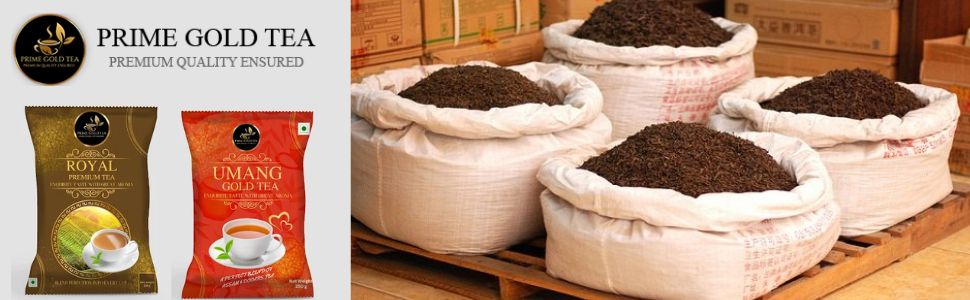
Prime Gold Tea supplies tea for wholesale and commercial requirements, including CTC tea grades, Assam tea, Dooars tea, Darjeeling tea, blended teas and customized packaging solutions. Its existing commercial supply options include bulk formats such as 25 kg, 50 kg and 100 kg, as well as smaller retail-ready packs and private-label packaging.
This guide explains how wholesale buyers can select the appropriate tea pack size for bulk purchasing, depending on their business model, monthly consumption and distribution requirements.
Bulk tea packaging refers to packaging tea in larger quantities primarily for wholesalers, distributors, repackers, tea manufacturers, foodservice businesses, exporters and commercial buyers.
Unlike consumer packs such as 100 g, 250 g or 500 g, bulk tea packaging is designed to move larger quantities efficiently.
Common commercial formats include:
5 kg tea packs
10 kg tea packs
20 kg tea packs
25 kg tea bags or sacks
50 kg bulk tea sacks
100 kg wholesale tea supply
Customized bulk packaging
Retail-ready packaging
Private-label tea packaging
The ideal size depends on how quickly the buyer sells or consumes the tea and whether the buyer intends to repack, distribute, manufacture or directly use the tea.
The price per kilogram is only one part of the total purchasing decision. Pack size can influence several operational costs.
Larger tea bags or sacks reduce the number of individual packages that need to be stored. However, they also require appropriate warehouse space and handling equipment.
For example, a distributor purchasing 500 kg of tea may prefer fewer large bulk units, while a retailer may prefer smaller packs that can be moved easily.
Smaller packs are easier for individual workers to lift, move and count. Larger packs can reduce packaging units but may require additional handling arrangements.
Bulk packaging can simplify loading and unloading and may reduce the number of individual packages in a shipment.
For commercial buyers, transportation efficiency becomes increasingly important as order volume increases.
A company selling tea under its own brand may purchase bulk tea and then repack it into:
100 g packs
250 g packs
500 g packs
1 kg packs
Foodservice packs
Customized private-label packs
In such cases, larger bulk packaging may be more suitable because the buyer already has a separate repacking operation.
Buying a larger pack does not automatically mean it is the right choice.
If tea remains in storage for a long period, the buyer must consider appropriate storage conditions to help protect aroma, taste and product quality.
Therefore, pack size should match consumption and sales velocity, rather than simply maximizing the quantity purchased.
There is no universal pack size suitable for every wholesale buyer. The following structure can help businesses identify an appropriate starting point.
| Pack Size | Suitable Buyers | Typical Commercial Use |
|---|---|---|
| 5 kg | Small retailers, cafés, tea shops | Regular commercial consumption |
| 10 kg | Tea shops, cafés, restaurants | Medium-volume usage |
| 20 kg | Hotels, caterers, institutional buyers | Regular foodservice consumption |
| 25 kg | Wholesalers, distributors, repackers | Bulk distribution and repacking |
| 50 kg | Large wholesalers, distributors, tea businesses | High-volume commercial supply |
| 100 kg | Large wholesalers, manufacturers, repackers | Large-scale tea procurement |
| Custom | Private-label brands, exporters, large buyers | Customized commercial requirements |
Prime Gold Tea has published bulk supply options including 25 kg, 50 kg and 100 kg formats, while smaller pouch sizes such as 100 g, 250 g, 500 g and 1 kg are also relevant for retail-oriented requirements.
A 5 kg tea pack can be practical for buyers who need commercial quantities but do not have extremely high daily consumption.
Potential buyers include:
Small tea shops
Cafés
Small restaurants
Specialty tea retailers
Trial buyers
New tea businesses
It can also be useful when a buyer wants to test a particular tea blend or grade before committing to a larger order.
For a new wholesale buyer, smaller commercial packs can help assess:
taste → customer response → consumption → repeat demand → larger procurement
A 10 kg pack offers a middle ground between small commercial purchases and larger wholesale sacks.
It can be suitable for:
Cafés
Restaurants
Tea stalls
Small hotels
Catering businesses
Institutional kitchens
Retailers with moderate turnover
This format can be useful for businesses that want to maintain sufficient stock without committing to a very large quantity at one time.
Hotels, restaurants and catering companies can have predictable tea consumption throughout the month.
A 20 kg commercial tea pack may be appropriate when:
Tea consumption is regular
The buyer has suitable storage space
Tea is used for daily beverage preparation
Procurement is done periodically
The buyer wants fewer purchase cycles
For HORECA businesses, the decision should be based on actual monthly consumption rather than simply selecting the largest available package.
The 25 kg pack is an important format for commercial tea buyers.
It can be suitable for:
Tea wholesalers
Distributors
Repackers
Retail tea brands
Private-label businesses
Tea blending units
Regional suppliers
A 25 kg unit is large enough for commercial procurement while remaining relatively manageable for warehouse handling.
For businesses purchasing several hundred kilograms, multiple 25 kg units can also make stock management easier.
For example:
100 kg requirement = 4 × 25 kg packs
This can provide more flexibility than receiving one single 100 kg unit, depending on the buyer's handling and storage system.
A 50 kg tea pack is particularly relevant for established wholesale businesses.
Prime Gold Tea has specifically offered 50 kg CTC tea packaging for retailers, tea shops, hotels, cafeterias, exporters and other commercial buyers. Its published information also mentions custom packaging and private-label options.
50 kg packaging can be considered by:
Tea wholesalers
Regional distributors
Large tea shops
Repackers
Hotels and institutions
Private-label businesses
Export traders
Commercial tea suppliers
A 50 kg unit can provide a balance between:
bulk purchasing + manageable handling + lower packaging frequency
For businesses with predictable tea consumption, this can be an efficient commercial format.
Businesses purchasing tea at a larger scale may prefer 100 kg bulk supply.
Prime Gold Tea has published 100 kg minimum-order supply for CTC tea, with 25 kg, 50 kg and 100 kg packaging options and customized packaging available for commercial requirements.
100 kg bulk supply can be relevant for:
Large tea wholesalers
Distributors
Repackers
Private-label tea brands
Tea manufacturers
Export houses
Trading companies
Large hospitality buyers
For high-volume businesses, 100 kg procurement can simplify purchasing and reduce the frequency of individual orders.
However, buyers should consider their warehouse capacity, turnover rate and storage conditions before ordering large quantities.
Wholesale buyers should distinguish between bulk packaging and retail-ready packaging.
| Factor | Bulk Packaging | Retail Packaging |
|---|---|---|
| Primary buyer | Wholesaler/distributor | Retail customer |
| Quantity | Large | Small |
| Typical size | 25–100 kg | 100 g–1 kg |
| Purpose | Distribution/repacking | Direct sale |
| Packaging frequency | Lower | Higher |
| Branding | Optional/custom | Usually required |
| Handling | Warehouse-focused | Shelf-focused |
Prime Gold Tea's published packaging information includes bulk formats for distributors and repackers as well as pouch sizes for retailers and supermarkets.
Instead of choosing packaging based only on the lowest quoted price per kilogram, wholesale buyers should evaluate several factors.
Start with actual consumption.
For example:
Daily consumption = 10 kg
Monthly consumption ≈ 300 kg
A buyer with this consumption pattern may consider regular 25 kg or 50 kg procurement depending on storage and delivery schedules.
A business selling tea quickly can generally manage larger procurement quantities more easily than a business with slow-moving inventory.
Ask:
How many kilograms do we sell each month?
How frequently do customers reorder?
How much warehouse space is available?
How frequently can new stock be received?
How quickly should each batch move?
These answers help determine the practical pack size.
Tea should be stored in a suitable environment away from excessive moisture, strong odours and conditions that may negatively affect quality.
Before purchasing 50 kg or 100 kg quantities, ensure that the warehouse can maintain appropriate storage conditions.
If you operate a private-label tea business, you may purchase tea in bulk and convert it into smaller branded packs.
For example:
100 kg bulk tea → 400 × 250 g retail packs
or
100 kg bulk tea → 200 × 500 g retail packs
or
100 kg bulk tea → 100 × 1 kg packs
This makes bulk packaging particularly relevant for tea repackers and private-label brands.
Private-label tea businesses often need a different procurement model.
Instead of purchasing finished consumer packs, a brand may purchase bulk tea and then sell it under its own branding.
The process may involve:
Tea selection → Sample approval → Bulk procurement → Blending → Packaging → Labelling → Distribution
Prime Gold Tea has highlighted customized blending and private-label packaging for businesses that want to develop tea products under their own brands.
Private-label buyers should discuss:
Tea grade
Blend composition
Pack size
Packaging material
Branding
Printing
Minimum order quantity
Labelling requirements
Delivery schedule
Repeat supply
Quality consistency
Recommended consideration: 25 kg, 50 kg or 100 kg
Wholesalers generally need larger quantities because tea is purchased for resale to retailers, shops and other businesses.
Recommended consideration: 25 kg–100 kg
The appropriate size depends on distribution territory, customer demand and warehouse capacity.
Recommended consideration: 25 kg, 50 kg or 100 kg
Larger bulk units can be practical when tea is transferred into smaller consumer packs.
Recommended consideration: 5 kg–25 kg
The right size depends primarily on daily tea consumption.
Recommended consideration: 10 kg–50 kg
Regular consumption and storage capacity should determine the procurement cycle.
Recommended consideration: 25 kg–100 kg or customized
The ideal quantity depends on the production and packaging volume.
Recommended consideration: Customized bulk packaging
Export requirements can vary according to destination, buyer specifications, shipment size and packaging requirements.
Wholesale buyers should not compare only the price per kilogram.
The actual procurement cost may also involve:
Packaging material
Labour
Transportation
Loading and unloading
Storage
Repacking
Labelling
Warehouse handling
Delivery frequency
A larger pack may reduce packaging and handling frequency, while smaller units can provide greater flexibility.
Therefore, the better commercial question is not simply:
“Which pack is cheapest?”
Instead, ask:
“Which pack size gives my business the most efficient total cost and inventory management?”
A simple comparison can help.
| Requirement | 25 kg | 50 kg | 100 kg |
|---|---|---|---|
| Small warehouse | ✓ | ||
| Medium warehouse | ✓ | ✓ | |
| Large warehouse | ✓ | ✓ | ✓ |
| Repacking | ✓ | ✓ | ✓ |
| Regular wholesale | ✓ | ✓ | ✓ |
| Large distribution | ✓ | ✓ | |
| Lower handling frequency | ✓ | ✓ | |
| Trial commercial procurement | ✓ | ||
| High-volume procurement | ✓ | ✓ |
The final choice should depend on actual business consumption, storage conditions, order frequency and supplier terms.
Pack size is only one part of bulk tea packaging.
The packaging material also needs consideration because tea can be affected by environmental exposure.
Wholesale buyers should discuss:
Moisture protection
Airtight sealing
Odour protection
Packaging strength
Transport durability
Storage requirements
Inner liner requirements
Outer sack or bag material
For long-distance transportation and commercial storage, packaging should be appropriate for the intended supply chain.
Prime Gold Tea has described moisture-resistant and airtight packaging for its bulk CTC tea offerings, along with customized packaging options for commercial buyers.
Packaging requirements can also vary according to the type of tea being purchased.
Prime Gold Tea supplies different CTC grades such as BP, BOP, BOPSM and Dust, along with other tea categories and blends.
Suitable bulk formats can be used for:
Tea shops
Chai stalls
Hotels
Restaurants
Tea brands
Repackers
Exporters
Bulk Assam tea can be purchased by wholesalers, tea brands, hospitality businesses and blending companies.
Dooars CTC is widely used in commercial tea applications where strong liquor, quick brewing and cost efficiency are important.
Darjeeling tea may require more specialized sourcing and packaging depending on grade, market positioning and buyer requirements.
Blended tea is particularly relevant for brands that require a specific taste profile and consistent commercial formulation.
Before placing a bulk tea order, ask the supplier:
What tea grade is being supplied?
What is the minimum order quantity?
Which bulk pack sizes are available?
Can the packaging size be customized?
Is private-label packaging available?
Can the supplier provide samples?
What are the current wholesale rates?
What is the expected dispatch timeline?
How is the tea packed for transportation?
What storage conditions are recommended?
Can the same blend be supplied regularly?
Is pan-India delivery available?
Are larger-volume prices available?
Can the supplier support recurring monthly orders?
Are customized blends available?
Getting these details before ordering can reduce procurement problems and make long-term sourcing easier.
Prime Gold Tea – Nutriant Food & Beverages Private Limited, based in Siliguri, Darjeeling, focuses on commercial tea supply, including Dooars and Assam teas, CTC grades and customized tea solutions. Its published offerings cater to wholesalers, distributors, retailers, tea shops, HORECA businesses, repackers, private-label brands and exporters.
For commercial buyers, Prime Gold Tea provides options covering:
Bulk CTC tea
Assam tea
Dooars tea
Darjeeling tea
Blended CTC tea
Multiple CTC grades
Bulk packaging
Retail-ready packaging
Private-label packaging
Customized tea blends
Wholesale supply
Pan-India commercial requirements
The company has also published bulk supply options starting from commercial quantities such as 50 kg and 100 kg, depending on the product and requirement.
Before placing your next wholesale tea order, use this checklist:
Tea type selected
Grade confirmed
Sample approved
Taste and liquor checked
Blend specification confirmed
Monthly consumption calculated
Required stock level estimated
MOQ confirmed
Pack size selected
Repeat-order frequency planned
Packaging material confirmed
Moisture protection checked
Sealing method confirmed
Custom packaging discussed if required
Private-label requirements finalized
Wholesale price confirmed
Quantity-based pricing discussed
Delivery cost checked
Dispatch timeline confirmed
Payment terms agreed
The right choice ultimately depends on tea consumption, turnover, warehouse capacity, repacking requirements, transportation and total procurement cost.
For businesses looking for bulk tea suppliers, wholesale CTC tea, Assam tea, Dooars tea, Darjeeling tea, private-label tea packaging or customized tea blends, Prime Gold Tea provides commercial sourcing options for different business requirements.
There is no single size suitable for every wholesaler. 25 kg, 50 kg and 100 kg are commonly relevant commercial formats, with the final choice depending on sales volume, storage capacity and order frequency.
It can be suitable for retailers with high tea consumption or businesses that regularly purchase tea for resale. Smaller retailers may prefer smaller commercial packs.
Yes. Prime Gold Tea has published 100 kg bulk CTC tea supply options, with 25 kg, 50 kg and 100 kg packaging formats available for commercial requirements.
Tea repackers can consider 25 kg, 50 kg or 100 kg bulk packs, depending on their packaging machinery, production volume and storage capacity.
Prime Gold Tea has published private-label and customized packaging options for businesses that want to sell tea under their own brand.
Bulk packaging is designed mainly for wholesalers, distributors, repackers and commercial buyers, while retail packaging is designed for direct consumer sale.
A 25 kg pack can provide greater handling flexibility, while 50 kg can reduce the number of individual packages for higher-volume buyers. The better option depends on your storage and turnover.
Bulk procurement can provide commercial pricing advantages because packaging and handling are distributed across larger quantities. However, actual pricing depends on tea grade, market conditions, quantity and supplier terms.
Yes. Buyers should discuss customized pack sizes, packaging formats, branding and private-label requirements directly with the tea supplier before p