

-
 0
0
0
Buying tea in bulk is not simply about finding the lowest price per kilogram. For wholesalers, retailers, distributors, tea shops, cafés, hotels, restaurants, caterers, private-label brands, and exporters, the right tea supplier can directly affect product quality, customer satisfaction, margins, and repeat sales.
Two suppliers may quote different prices for what appears to be the same tea grade, but the actual product can differ in leaf or granule size, liquor strength, aroma, freshness, blending, moisture condition, packaging, consistency, delivery terms, and overall supply reliability.
Therefore, before placing a large order, buyers should compare tea suppliers using the same set of commercial and quality parameters.
This guide explains how to compare wholesale tea suppliers, what questions to ask, how to evaluate samples, how to compare quotations, and what to check before confirming a bulk tea order.
A proper supplier comparison should cover more than price.
Before placing an order, compare suppliers on:
| Comparison Factor | What to Check |
|---|---|
| Tea Quality | Taste, aroma, colour, liquor and freshness |
| Tea Grade | BP, BOP, PD, Dust and other required grades |
| Origin | Assam, Dooars, Darjeeling or other sourcing region |
| Sample Quality | Whether the supplied sample matches your requirement |
| Batch Consistency | Whether future batches can maintain similar characteristics |
| Wholesale Price | Price per kg based on grade and quantity |
| MOQ | Minimum order quantity |
| Packaging | Bulk sacks, laminated packs or customized packaging |
| Delivery | Dispatch time, transport and delivery coverage |
| Customization | Blending, grade selection and private-label options |
| Documentation | Invoice, product details and applicable business documents |
| Communication | Response time and clarity of commercial terms |
| Repeat Supply | Ability to maintain regular supply |
The objective is to identify a supplier that fits your quality, quantity, budget and business requirements, rather than selecting a supplier only because of a low quotation.
The first question should be:
“Does the tea meet my product requirement?”
Price comparison is meaningful only when the products being compared are reasonably comparable.
For example, a buyer looking for strong CTC tea for milk-based chai should not compare the price of a strong commercial CTC grade with a premium whole-leaf tea simply because both are sold as black tea.
When evaluating a tea sample, check:
Appearance
Granule or leaf uniformity
Aroma
Liquor colour
Liquor strength
Taste
Brewing performance
Freshness
Aftertaste
Performance with milk and sugar, if applicable
Consistency with your existing product
For commercial buyers, the most important question is whether the tea performs consistently in the intended application.
Tea grades are an important part of bulk purchasing.
Depending on the product and processing method, buyers may encounter grades such as:
BP
BOP
PD
Dust
Pekoe
OP
FOP
Specialty or blended grades
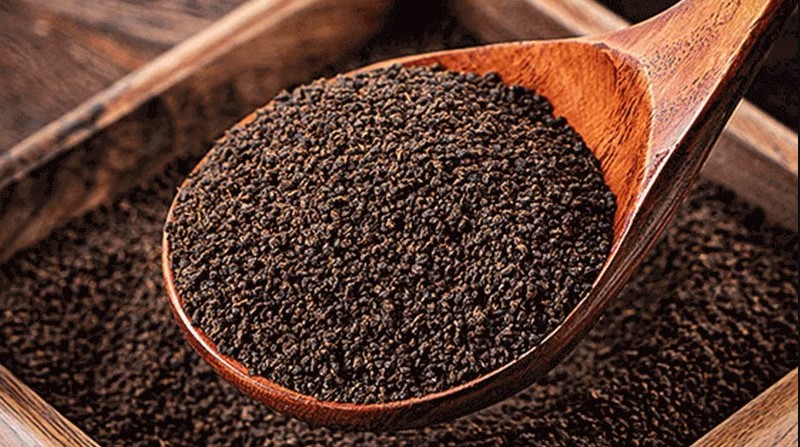
For CTC tea, grades such as BP, BOP, PD and Dust are commonly considered when developing blends or sourcing tea for commercial consumption.
However, the grade name alone should not determine the buying decision. The actual sample should be tested because buyers need to understand how the particular batch performs.
Prime Gold Tea offers multiple CTC grades for wholesale buyers, allowing businesses to select products according to their required taste, strength and commercial application.
The sourcing region can be an important consideration when comparing suppliers.
Indian tea buyers commonly source tea from regions including:
Assam
Dooars
Darjeeling
Nilgiri
Other tea-growing regions
Each region can offer different characteristics depending on tea type, season, processing and blending.
For example, Assam and Dooars CTC teas are widely used for strong, brisk tea applications.
Instead of simply asking:
“Is this Assam tea?”
ask the supplier:
What is the tea origin?
Is it single-origin or blended?
Which grade is being supplied?
Is the tea sourced from estates, manufacturers or traders?
Can the supplier maintain the same specification for repeat orders?
Prime Gold Tea states that it sources tea from major tea-growing regions including Assam and West Bengal and supplies bulk tea to commercial buyers.
One of the most practical ways to compare tea suppliers is to test samples from multiple suppliers.
Do not compare quotations alone.
Ask each supplier for a sample according to the same specification, such as:
Product=CTC Tea
Grade=BP
Quantity=100 Kg
Application=Milk Tea
Required Liquor=Strong
Packaging=Bulk
Then prepare each sample using the same brewing method.
Compare:
Dry tea appearance
Aroma
Brewing time
Liquor colour
Strength
Taste
Aroma after brewing
Performance with milk
Performance with sugar
Overall cup quality
Prime Gold Tea's wholesale buying guidance also recommends requesting samples and evaluating characteristics such as colour, liquor strength, aroma, freshness, taste and clarity before committing to bulk purchasing.
A common mistake is asking five suppliers:
“What is your tea price?”
This can produce five completely different quotations.
Instead, send the same requirement to every supplier.
For example:
Required Product=CTC Tea
Required Grade=BP
Quantity=500 Kg
Application=Retail Tea Brand
Packaging=Bulk
Delivery Location=Delhi
Required Sample=Yes
Now each supplier can quote against the same requirement.
This makes your comparison much more useful.
The lowest quotation is not necessarily the lowest overall cost.
Suppose:
| Supplier | Price/Kg | Quality | Consistency | Delivery |
|---|---|---|---|---|
| Supplier A | ₹150 | Standard | Moderate | Normal |
| Supplier B | ₹160 | Better | High | Reliable |
| Supplier C | ₹145 | Variable | Low | Uncertain |
A buyer should evaluate the complete commercial picture rather than selecting the ₹145 quotation automatically.
A cheaper tea may result in:
More wastage
Poor customer acceptance
Inconsistent blends
Lower repeat sales
Additional blending costs
Packaging or logistics issues
Difficulty maintaining the same product specification
Therefore, compare price against usable quality and supply reliability.
When comparing tea supplier quotations, ask whether the quoted price includes all applicable costs.
Your quotation should clearly mention:
Tea Price=₹___/Kg
GST=Applicable/Included as quoted
Packaging=Included/Additional
Transport=Included/Additional
Loading=Included/Additional
Delivery Location=_____
MOQ=_____ Kg
Payment Terms=_____
Quotation Validity=_____
This prevents a situation where one supplier appears cheaper because some costs have not been included in the initial quotation.
Minimum Order Quantity, or MOQ, is particularly important for new businesses.
Different suppliers may have different minimum quantities.
For example:
MOQ=50 Kg
MOQ=100 Kg
MOQ=500 Kg
MOQ=1000 Kg
Prime Gold Tea has published bulk CTC tea offerings with minimum order quantities starting at 100 kg for several products, while its product range and bulk solutions can vary by tea type and requirement.
Before ordering, confirm:
Minimum order
Quantity per grade
Whether mixed grades are allowed
Whether repeat buyers receive different commercial terms
Whether larger orders qualify for volume pricing
For a tea business, consistency can be as important as the initial sample.
Imagine you launch a tea blend that customers like. After two months, the supplier provides a batch with noticeably different:
Colour
Strength
Aroma
Granule size
Taste
This can affect your finished product.
Ask the supplier:
“Can you supply future batches according to the same specification?”
Also ask whether the supplier maintains product specifications or internal quality checks for different batches.
Prime Gold Tea states that its wholesale tea batches undergo quality checks for characteristics including grain size, taste and aroma.
Tea is sensitive to moisture, odour and storage conditions. Packaging therefore matters during bulk transportation and storage.
Ask suppliers about:
Bulk sacks
Laminated bags
Moisture-resistant packaging
Retail-ready packaging
Custom printed packaging
Private-label packaging
Packaging weight options
For example, Prime Gold Tea has described bulk packaging options including 25 kg, 50 kg and 100 kg packs, along with customized packaging options depending on the requirement.
The correct packaging depends on whether you are:
Reselling loose tea
Repacking tea
Supplying tea to restaurants
Operating a tea stall
Building your own tea brand
Distributing tea to retailers
Exporting tea
If you are building your own tea brand, supplier capabilities become even more important.
A suitable supplier may need to support:
Custom Blend=Yes
Brand Name=Your Brand
Pack Size=250g/500g/1Kg
Packaging=Customized
Printing=Required
MOQ=Supplier-specific
Prime Gold Tea has stated that it provides customized blending and private-label packaging solutions for resellers, distributors and businesses developing their own tea brands.
Before choosing a supplier, ask whether they can support your business as it grows rather than only fulfilling your first order.
A good tea supplier should be able to clearly explain the delivery process.
Ask:
Where will the order be dispatched from?
What is the expected dispatch time?
Which transport method is used?
Is transportation included?
Can the supplier deliver to your city?
Is tracking available?
How is the tea packed for transportation?
What happens if the shipment is delayed?
Prime Gold Tea has stated that it supplies bulk tea across India through transport partners and provides nationwide delivery for its wholesale customers.
For regular commercial buyers, predictable delivery can help prevent stock shortages.
Communication is often overlooked when comparing tea suppliers.
Before placing an order, observe:
How quickly does the supplier respond?
Does the sales team understand your requirement?
Are specifications clearly explained?
Are prices transparent?
Is the quotation detailed?
Are samples provided?
Are delivery commitments clearly communicated?
Can you contact the supplier after placing an order?
A supplier relationship becomes increasingly important when you start placing monthly or repeat orders.
Bulk tea purchasing is often a recurring requirement.
If you purchase:
100 Kg/month
your supplier should ideally be able to support regular replenishment.
If your business grows to:
500 Kg/month → 1,000 Kg/month → 5,000 Kg/month
you may need greater production and supply capacity.
Therefore, ask:
“Can you supply the same product specification regularly as my quantity increases?”
This is especially important for:
Tea wholesalers
Distributors
Retail brands
Hotels
Restaurants
Cafés
Tea shops
Caterers
Private-label brands
Exporters
Payment conditions can affect your working capital.
Compare:
Advance payment
Part payment
Balance before dispatch
Credit terms, if available
Payment methods
Order confirmation process
Do not assume that every supplier offers the same payment conditions.
Always confirm the terms before placing the purchase order.
Before placing a significant commercial order, buyers should verify the supplier's business information and applicable documentation.
Depending on the transaction and product, buyers may need information such as:
Legal business name
GST details
Invoice
Product specification
Packaging information
Applicable food-business documentation
Shipping documentation for export orders
For larger orders, keeping proper purchase and product documentation can make future transactions easier.
Instead of relying on memory, create a simple comparison sheet.
| Factor | Supplier A | Supplier B | Supplier C |
|---|---|---|---|
| Product | CTC BP | CTC BP | CTC BP |
| Sample Quality | |||
| Aroma | |||
| Liquor Strength | |||
| Taste | |||
| Price/Kg | |||
| MOQ | |||
| Packaging | |||
| Delivery | |||
| Custom Blending | |||
| Private Label | |||
| Documentation | |||
| Repeat Supply | |||
| Payment Terms |
This gives you a factual basis for comparing quotations.
Before confirming your purchase order, ask the supplier:
What tea variety are you supplying?
What is the exact grade?
Where is the tea sourced from?
Is it single-origin or blended?
Can you provide a sample?
How does the tea perform with milk and sugar?
Can the same specification be maintained for repeat orders?
What is the price per kg?
What is the MOQ?
Are bulk discounts available?
What are the payment terms?
Is GST included?
Is transportation included?
How long is the quotation valid?
What is the dispatch time?
What packaging options are available?
Can you supply regularly?
Can you handle larger quantities?
Can you provide customized blends?
Do you support private-label packaging?
For businesses looking for wholesale tea suppliers in India, Prime Gold Tea provides bulk tea solutions for different commercial requirements.
The company operates under Nutriant Food & Beverages Private Limited and is based in Siliguri, West Bengal, an important location for sourcing tea from the Assam and Dooars tea-growing belt. Its published wholesale range includes CTC tea grades and other tea products for commercial buyers.
Prime Gold Tea's wholesale offerings are positioned for:
Tea wholesalers
Tea distributors
Retailers
Tea shops
Cafés
Hotels
Restaurants
Caterers
Private-label brands
Packaging businesses
Export and trading companies
The company has also published bulk supply options, customized blending, private-label packaging and sample-based purchasing guidance for commercial buyers.
If you are comparing bulk tea suppliers, you can share your exact requirement with Prime Gold Tea and request a quotation based on the product specification.
For example:
Tea Type=CTC Tea
Grade=BP/BOP/PD/Dust
Quantity=100/500/1000 Kg
Application=Retail/Tea Shop/Hotel/Café
Packaging=Bulk/Customized
Delivery Location=Your City
Private Label=Yes/No
Custom Blend=Yes/No
This allows the supplier to understand your commercial requirement before preparing a quotation.
Instead of asking only for the lowest tea price per kg, discuss the complete requirement including quality, grade, quantity, packaging, delivery and repeat supply.
For a straightforward purchasing process, follow these seven steps:
Decide the tea type, grade, quantity, application and packaging.
Request quotations using the same specifications.
Obtain samples before committing to a large order.
Compare aroma, taste, liquor colour, strength and brewing performance.
Check tea price, taxes, packaging, transport and other applicable charges.
Check MOQ, delivery schedule, repeat supply and customization options.
If you are testing a new supplier, consider starting with an appropriate trial quantity before moving to larger recurring purchases.
A lower price may represent a different grade or specification.
Bulk purchasing without testing can create avoidable quality problems.
The term “black tea” or “CTC tea” alone may not provide enough purchasing detail.
A competitive tea price may become less competitive after transportation and other costs.
Your first batch may be good, but your business also needs reliable future supply.
Always compare suppliers using the same grade, quantity, packaging and delivery requirements.
Poor storage or unsuitable packaging can affect tea freshness during transportation and storage.
Before placing your order, confirm:
☐ Tea type confirmed
☐ Grade confirmed
☐ Origin discussed
☐ Sample tested
☐ Taste approved
☐ Liquor strength checked
☐ Aroma checked
☐ Price per kg confirmed
☐ MOQ confirmed
☐ GST and other applicable charges checked
☐ Transportation confirmed
☐ Packaging confirmed
☐ Delivery timeline confirmed
☐ Payment terms confirmed
☐ Documentation confirmed
☐ Repeat supply discussed
☐ Custom blending discussed, if required
☐ Private-label requirements discussed, if required
Compare suppliers based on tea quality, grade, sample performance, price, MOQ, packaging, delivery, documentation, consistency, customization and repeat supply rather than price alone.
Yes. A sample allows you to evaluate the actual tea's aroma, taste, liquor colour, strength, freshness and brewing performance before committing to a larger quantity.
Check granule appearance, aroma, liquor colour, strength, taste, brewing performance and how the tea performs with milk and sugar if it is intended for milk tea.
Price should be compared with the actual product specification, quality, delivery cost and supply consistency. A lower quotation may not represent the same quality or commercial terms.
MOQ means Minimum Order Quantity. It is the smallest quantity a supplier agrees to sell for a particular product or order.
Some wholesale tea suppliers provide customized blending based on the buyer's required taste, strength, grade and application. Confirm the available customization and MOQ with the supplier.
Yes. Some suppliers provide private-label services where businesses can purchase tea, use customized blends and sell the finished product under their own brand, subject to the supplier's MOQ and packaging requirements.
Ask every supplier for a quotation based on the same tea type, grade, quantity, packaging, delivery location and commercial terms. This creates a more meaningful price comparison.
The appropriate quantity depends on your sales volume, storage capacity, budget and supplier MOQ. New buyers can discuss a suitable trial quantity before moving to larger recurring orders.
Prime Gold Tea supplies tea for commercial buyers and publishes bulk options covering CTC grades, wholesale quantities, customized blending and private-label requirements. Buyers can discuss their required grade, quantity, packaging and delivery location to request a suitable quotation.
Choosing a bulk tea supplier should be treated as a product and commercial evaluation rather than a simple price comparison.
Before placing an order, compare the tea sample, grade, origin, taste, aroma, liquor strength, price, MOQ, packaging, delivery, documentation, customization and repeat-supply capability.
For wholesalers, retailers, tea shops, distributors, cafés, hotels and private-label businesses, these factors can help create a more reliable sourcing process and reduce the risks associated with large-volume purchasing.
If you are searching for a wholesale tea supplier in India, bulk CTC tea supplier, CTC tea wholesaler, loose tea supplier, or a supplier for custom tea blends and private-label tea, Prime Gold Tea can be contacted with your exact product specification, quantity and packaging requirement to discuss available bulk supply options.
Prime Gold Tea – Bulk Tea Supply for Wholesale, Retail, Distribution and Private-Label Requirements.