100 Kg (Min. Order)
₹300.00



 0
0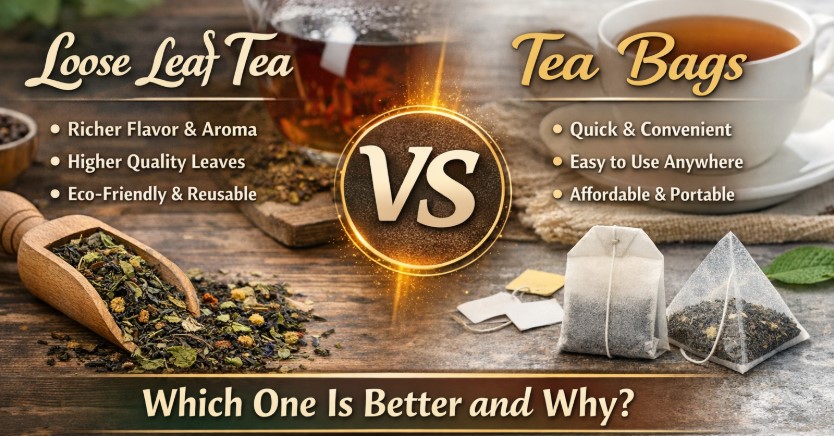
Tea is one of the most widely consumed beverages in the world, enjoyed for its taste, aroma, and health benefits. With evolving consumer preferences, a common debate has emerged—loose leaf tea vs tea bags. While tea bags offer convenience, loose leaf tea is often associated with superior quality and flavor. This article explores the differences between the two to help you decide which option suits your lifestyle and preferences best.
Loose leaf tea consists of whole or partially broken tea leaves that are free from bags or sachets. These leaves have more space to expand during brewing, allowing them to release their full flavor and aroma. Loose leaf tea undergoes minimal processing, which helps preserve its natural oils, antioxidants, and nutrients. Popular varieties include black tea, green tea, white tea, oolong tea, and herbal infusions.

 Add to Cart
 Add to Cart
 Add to Cart
 Add to Cart
Tea bags are small sachets containing tea leaves, usually tea dust or fannings, designed for quick and easy brewing. They are commonly made from paper, nylon, silk, or biodegradable materials. Tea bags were originally created for convenience and portion control. Today, pyramid tea bags and eco-friendly options are also available, offering better infusion than traditional flat tea bags.
The quality of tea leaves plays a crucial role in determining taste and health benefits.
Loose leaf tea typically uses whole or larger leaf pieces, which retain essential oils and natural compounds.
Tea bags often contain smaller fragments or dust, which can lose flavor faster and may include lower-grade leaves.
Higher-quality leaves result in a more refined and authentic tea experience, making loose leaf tea the preferred choice for tea connoisseurs.
Loose leaf tea offers a richer, more complex flavor due to better leaf expansion during brewing. The aroma is stronger, and the taste can be customized by adjusting water temperature, steeping time, and quantity.
Tea bags, on the other hand, deliver a consistent and quick brew, making them ideal for busy routines. However, the restricted space inside a tea bag limits infusion, often resulting in a less nuanced flavor profile.
Loose leaf tea generally contains higher levels of antioxidants, polyphenols, and catechins because of minimal processing. The absence of artificial additives also contributes to its purity.
Some tea bags, especially non-biodegradable ones, may release microplastics when steeped in hot water. Additionally, finely ground tea may lose nutrients faster due to increased oxidation.
For health-conscious consumers, loose leaf tea is often considered the superior option.
Tea bags are unmatched in terms of convenience. They require no additional equipment and are perfect for travel, office use, or quick preparation.
Loose leaf tea requires tools such as infusers, strainers, or teapots, making the process slightly more time-consuming. However, many tea drinkers appreciate the ritual and control that comes with brewing loose leaf tea.
At first glance, tea bags appear more affordable. However, loose leaf tea often provides better value per cup as the leaves can be reused for multiple infusions. Additionally, the superior taste and health benefits justify the cost for many consumers.
Tea bags may seem economical initially but often cost more in the long run when considering quality and quantity.
Loose leaf tea produces minimal waste and usually comes in recyclable or compostable packaging. It is considered a more eco-friendly option.
Tea bags, especially those made with plastic or nylon, contribute to landfill waste. While biodegradable tea bags are becoming more popular, they are not yet universally adopted.
Environmentally conscious consumers often prefer loose leaf tea for its sustainability.
Choose loose leaf tea if you value flavor depth, health benefits, sustainability, and a premium tea experience.
Choose tea bags if you prioritize speed, portability, and ease of preparation.
 Add to Cart Add to Cart
 Add to Cart Add to Cart
Your choice ultimately depends on lifestyle, taste preference, and personal priorities.
Both loose leaf tea and tea bags have their own advantages. Loose leaf tea excels in quality, taste, health benefits, and sustainability, while tea bags offer unmatched convenience and consistency. Understanding these differences allows you to make an informed decision and enjoy your tea just the way you like it.
Q1. Is loose leaf tea healthier than tea bags?
Yes, loose leaf tea generally contains more antioxidants and fewer additives.
Q2. Do tea bags contain plastic?
Some tea bags are made with plastic or nylon. Always check packaging for biodegradable options.
Q3. Can loose leaf tea be reused?
Yes, high-quality loose leaf tea can be steeped multiple times.
Q4. Which tea is better for daily consumption?
Loose leaf tea is ideal for daily use due to its purity and health benefits.